
Let’s Talk About AI in Interior Design
Artificial intelligence has made its way into the design conversation quickly. Clients come to us inspired, excited, and often holding beautifully rendered AI-generated images. We understand the appeal. These images feel polished, aspirational, and immediate. But here is the truth that matters most before any project begins.
AI images are not design plans.
They are visual prompts, not buildable realities.
Where AI Gets It Wrong
AI-generated interiors are created without real-world constraints. They do not account for structural requirements, local building codes, realistic budgets, product availability, or how people actually live in a space. They combine proportions that cannot exist, finishes that cannot be sourced together, and layouts that ignore function entirely.
What this creates is a false expectation before we have even started the design process.
Clients sometimes believe the image represents a finished solution, when in reality it is a collage of ideas that has never been tested against real materials, real dimensions, or real use.
Why “Exact Replication” Is Rarely Possible
Interior design is not image recreation. It is problem solving.
Every home has its own architecture, limitations, and opportunities. Ceiling heights differ. Natural light behaves differently. Existing plumbing, electrical, and structural systems matter. A design that works beautifully in theory may fail entirely once translated into a real environment.
AI images also frequently feature products that do not exist, finishes that cannot perform, or custom elements that would require extreme budgets to fabricate. When a client expects an exact replica, disappointment can follow, even when the final design is thoughtful, elevated, and far more livable.
What Professional Design Actually Looks Like
At R. Nickson Interiors, we do not design from fantasy. We design from intention.
Our process is rooted in:
• Functional layouts based on how you live and work • Materials selected for durability, maintenance, and performance • Real fabric samples, finishes, and fixtures you can see and touch • Proportions that feel right in your specific space • Construction knowledge that ensures what we design can actually be built
When we create renderings, they are based on approved plans, selected materials, and realistic dimensions. They exist to communicate decisions clearly, not to oversell an idea that cannot be executed.
Inspiration Is Welcome. Blind Faith Is Not.
AI imagery can be a helpful starting point. It can communicate mood, color direction, or a general aesthetic preference. What it cannot do is replace professional expertise, technical knowledge, or lived experience in construction and design.
The most successful projects begin when clients are open to collaboration, guidance, and refinement. Not replication.
A Real Example: Before, AI, and the Finished Home
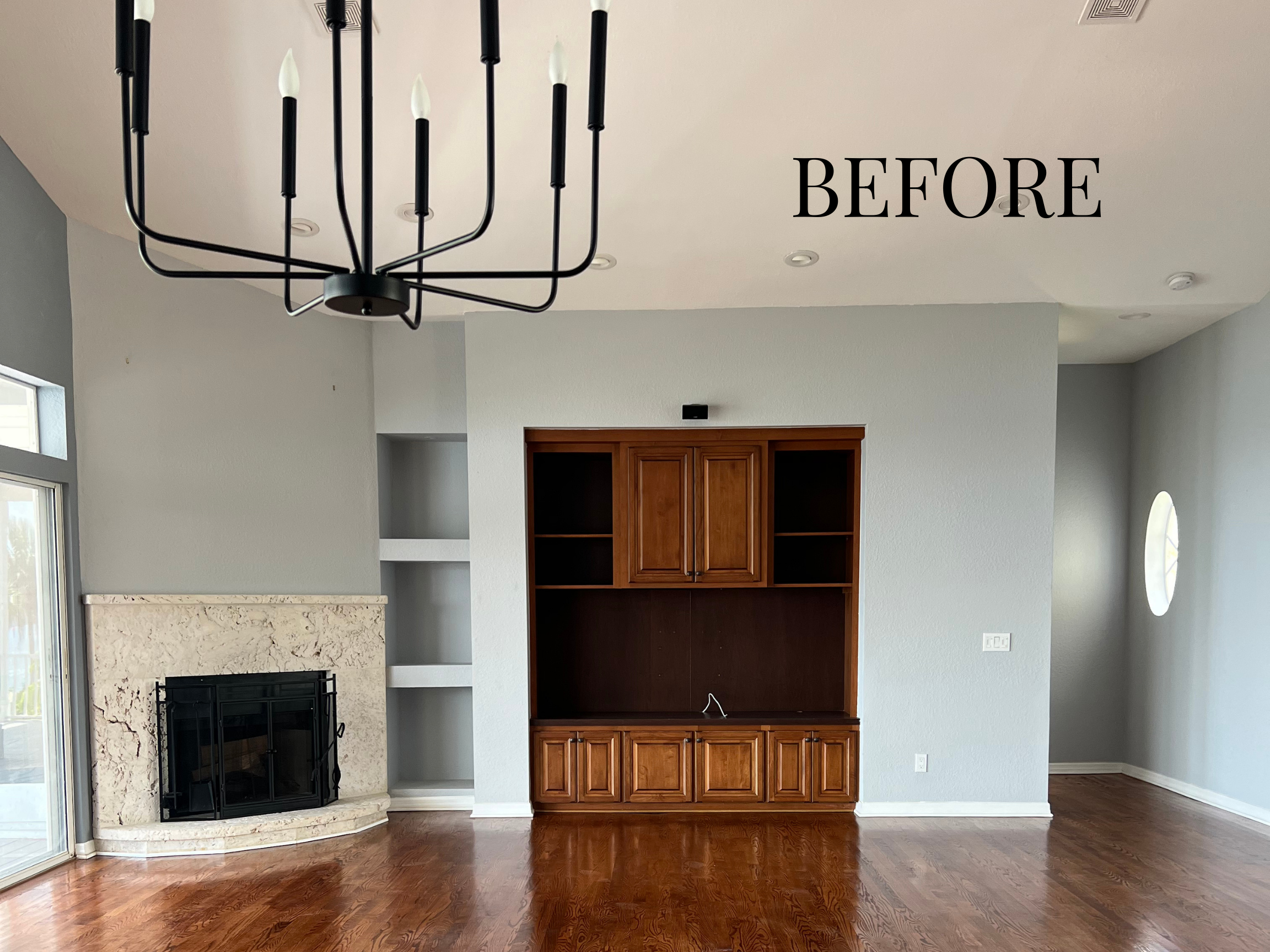
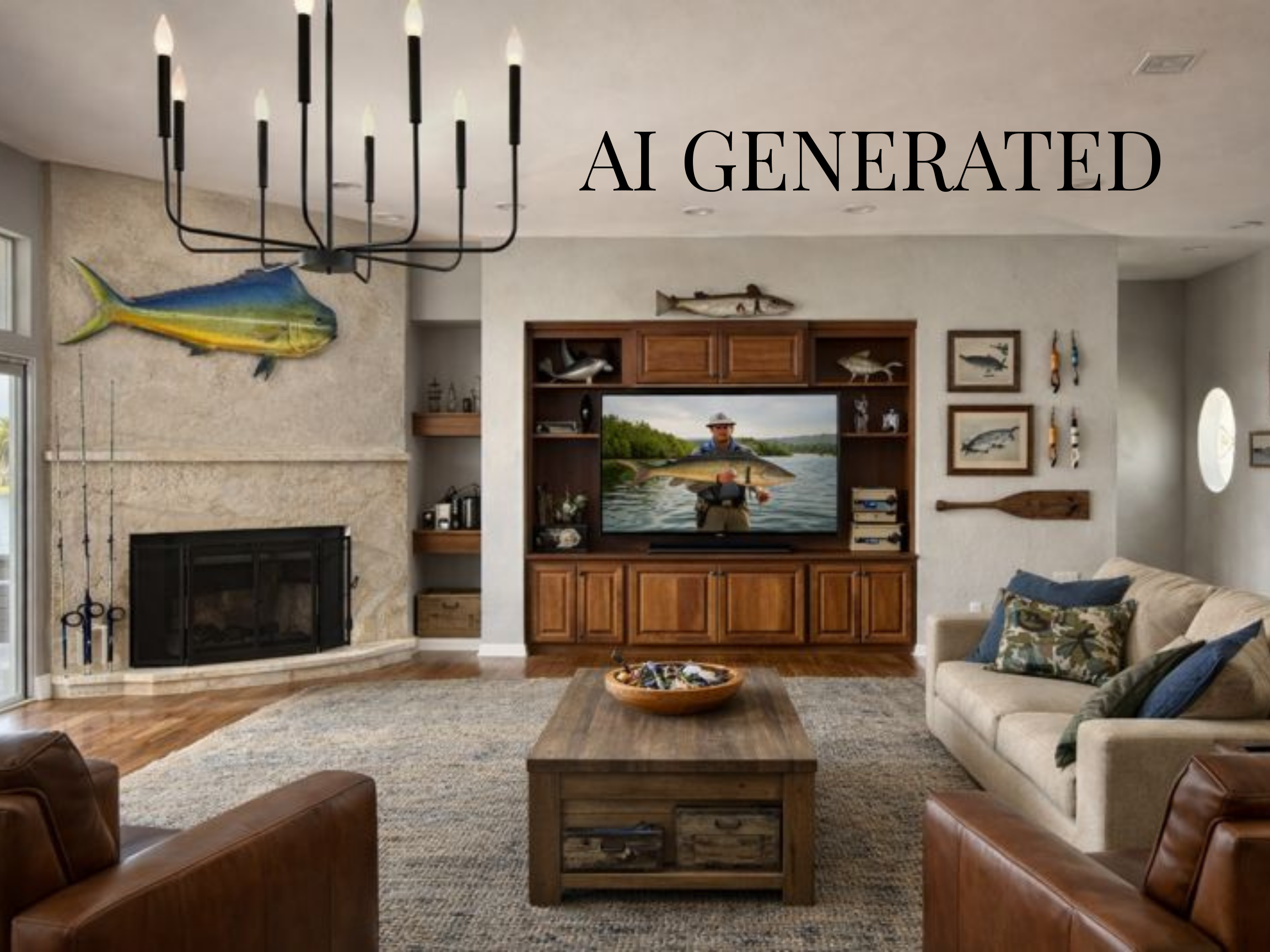
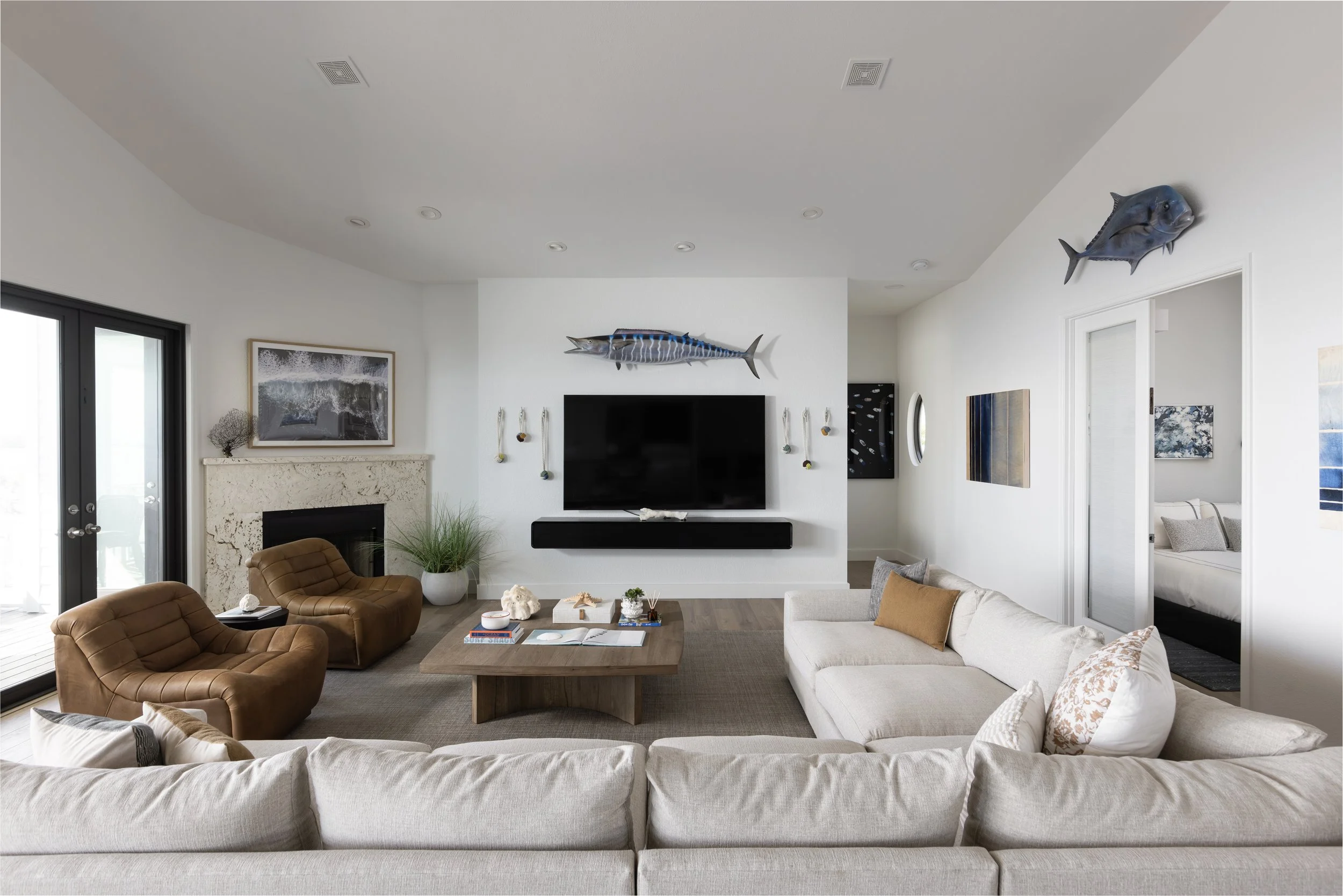
This is where AI often creates the biggest disconnect.
In this project, you can clearly see three stages: the original space, the AI-generated rendering, and the completed R. Nickson Interiors design.
The AI image is visually compelling, but it lacks critical information that determines whether a space actually works.
AI does not know what is behind the living room walls. It does not understand adjacent rooms, circulation paths, or how people enter and exit the space. It does not know the true dimensions, ceiling conditions, or structural limitations. It does not know whether walls can be removed or if they are load bearing.
AI also does not work with real materials. It does not pull from actual fabric swatches, performance ratings, or finishes from vetted manufacturers. It cannot evaluate how leather will age, how a fabric will clean after guests come in from the lake, or whether a material will hold up to repeated use.
Most importantly, AI does not understand how you live.
It does not know if this room is a landing zone after a long day of fishing, a high-traffic gathering space, or a place where wet swimsuits, dogs, kids, and guests all converge. It does not understand flow, durability, or long-term wear.
The finished space succeeds because every decision was made with intention. Materials were selected to weather beautifully, layouts were designed to support movement and access, and furnishings were chosen for real life, not just visual impact.
This is the difference between an image and a design.
The Bottom Line
Design is not about chasing an image. It is about creating a space that works beautifully for your life, holds up over time, and feels intentional at every turn.
AI may spark the conversation, but thoughtful design is what brings it to life.